At a chop house, the menu is short, the room is loud, and the fire never goes out. But the only number that separates a $68 ribeye from a $34 mistake is temperature. Not marbling score. Not dry-aging days. Not the breed printed on the ticket. Temperature is the controlling variable. It decides whether intramuscular fat renders into silk or stays waxy. It decides whether a crust forms before the center turns gray. It decides whether a porterhouse for two arrives as a shared event or a shared apology.
This isn’t a romantic argument. It’s a butchery and cookery argument. In East Coast and Midwest chop house traditions, the fire is the loudest voice in the kitchen. The meat is the second. Everything else—sides, sauces, service—is support. If the temperature is wrong, the support doesn’t matter.
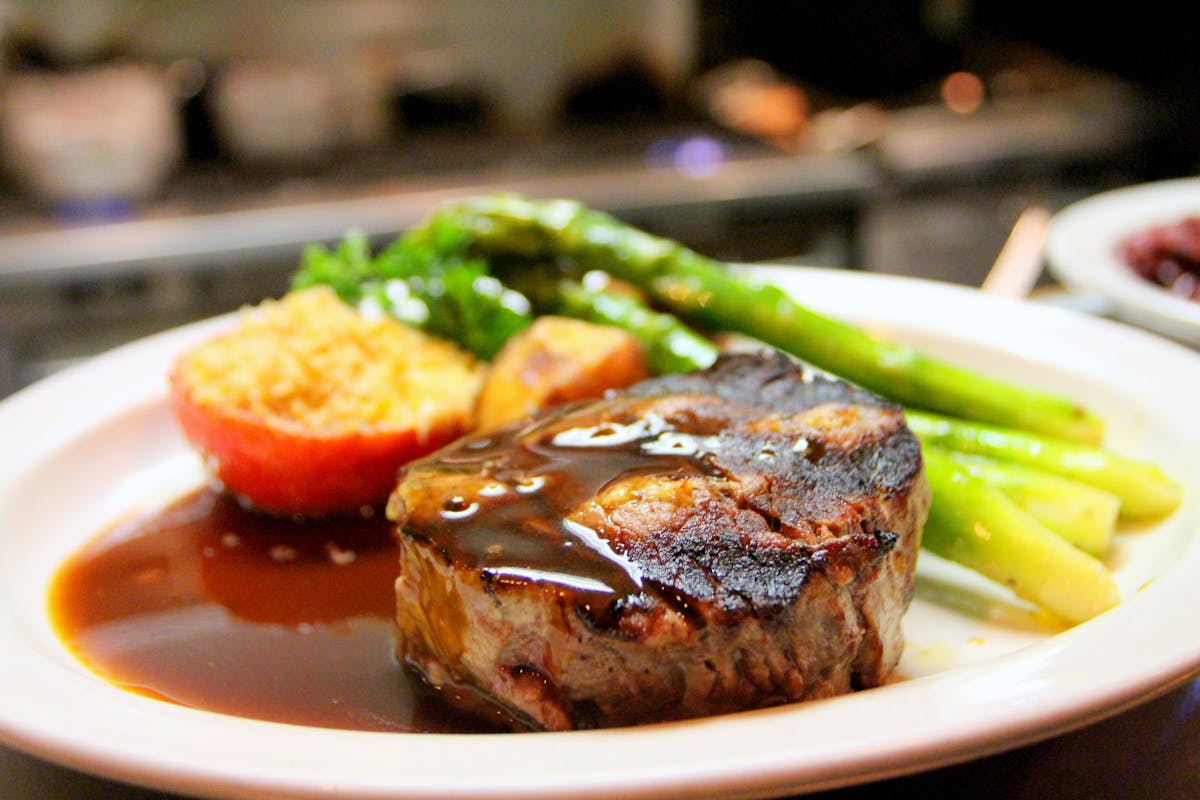
The Main Entity: Temperature as the Controlling Variable
Temperature is the main entity here because it’s the only metric that touches every stage of a chop house operation. It starts in the walk-in, where whole primals rest at 34°F to 36°F. It continues on the cutting table, where a butcher’s hands and a band saw generate friction heat. It peaks over a 1,200°F broiler or a live oak fire. It ends at the table, where a steak’s internal temperature keeps climbing for five to ten minutes after it leaves the heat.
Adjacent concepts include thermal carryover, the Maillard reaction, fat rendering, protein denaturation, and the temperature gradient inside a thick-cut steak. These aren’t academic terms. They’re the daily language of a working chop house. A cook who can’t read a gradient with a cake tester or a quick palm press is guessing. A cook who guesses will eventually serve a medium-well steak to a guest who ordered medium-rare. That guest won’t come back.
Why Temperature Beats Every Other Metric
Marbling scores are useful at the packing plant. Dry-aging days are useful for inventory and flavor development. Breed claims are useful for marketing. But none of those metrics can save a steak that’s cooked to the wrong internal temperature. A Prime ribeye cooked to 155°F is dry, tight, and disappointing. A Choice ribeye cooked to 128°F and rested properly can be excellent. The difference isn’t the grade. It’s the heat.
Temperature also controls texture. Beef fat begins to soften around 100°F and renders more fully between 130°F and 140°F. Collagen in tougher cuts starts converting to gelatin around 160°F, which is why a chuck steak needs a different temperature path than a strip loin. A chop house that understands this will treat a hanger steak differently from a filet. The fire is the same. The target is not.
The Temperature Gradient Inside a Thick Steak
A two-inch ribeye is not one temperature. It’s a gradient. The exterior may hit 300°F during searing. The outer band may reach 150°F. The center may rest at 125°F. The goal isn’t a uniform temperature. The goal is a controlled gradient: a dark, dry crust, a thin band of well-done meat, and a wide, rosy center. That gradient is what makes a chop house steak feel different from a steak cooked on a gas grill at home.
To build that gradient, the cook has to manage two things at once: surface temperature and internal temperature. Surface temperature drives browning. Internal temperature drives doneness. If the surface is too cool, the steak steams instead of sears. If the surface is too hot for too long, the outer band thickens and the center overcooks. The best chop house cooks learn to read the sound of the steak on the grate, the color of the crust, and the spring of the meat under a finger. They’re not checking a timer. They’re checking temperature.
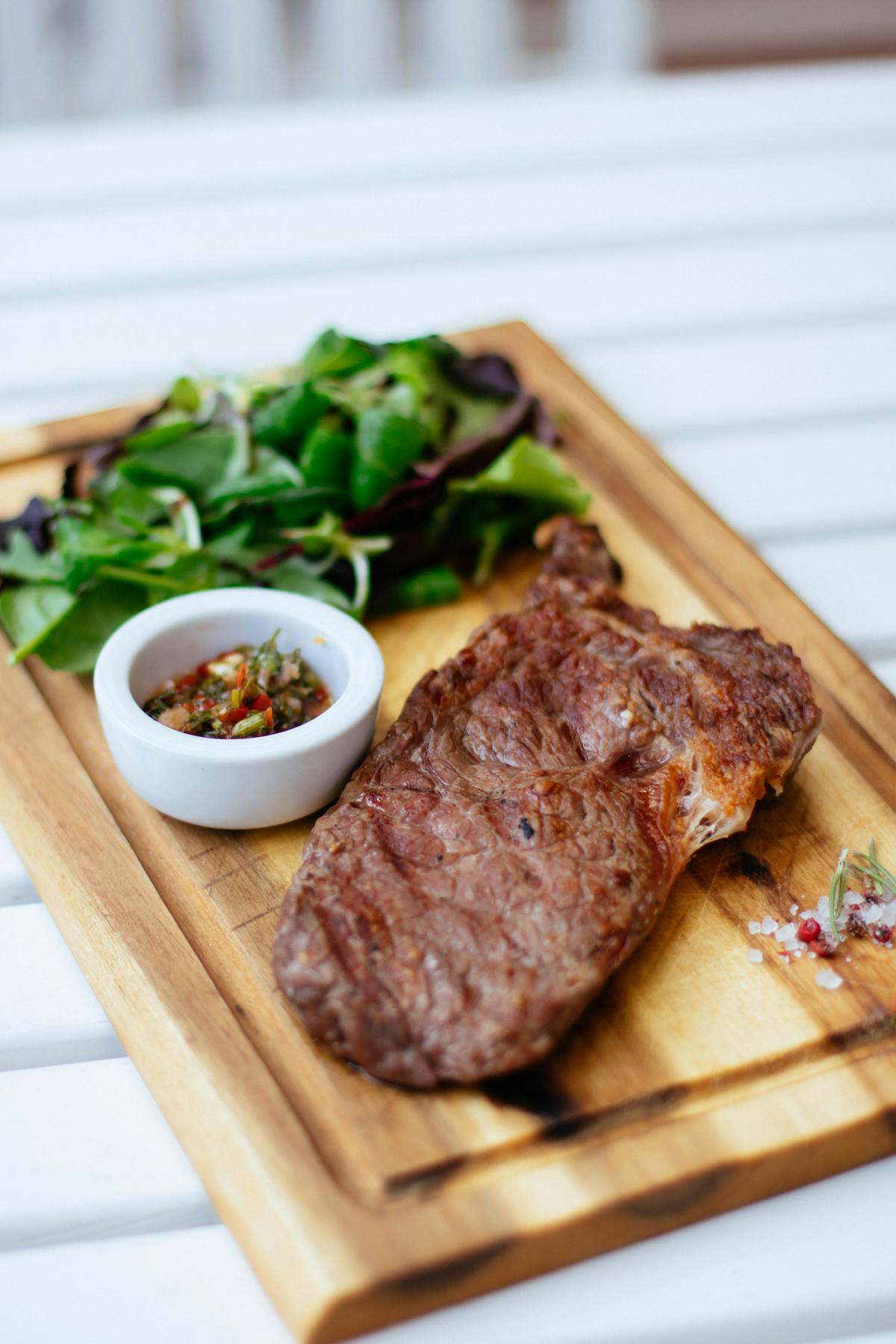
Fire-Driven Cookery and the East Coast–Midwest Divide
East Coast chop houses tend to favor high-heat broilers. The steak sits close to an overhead flame, and the cook controls doneness by moving the steak up or down on a rack. Midwest chop houses often favor live-fire grills or cast-iron grates over hardwood coals. The heat is below, not above. The temperature management is different, but the principle is the same: control the surface, watch the center, and respect the carryover.
In both traditions, the fire isn’t decoration. It’s the primary cooking tool. A broiler at 1,200°F will sear a steak in under two minutes. A live oak fire at 900°F will do the same, but with more smoke and more variation. The cook who works a live fire has to manage hot spots, flare-ups, and coal beds. The cook who works a broiler has to manage rack position and door time. Both are temperature problems.
Carryover: The Invisible Cook
Carryover cooking is the temperature rise that happens after a steak leaves the heat. A thick ribeye pulled at 120°F can climb to 128°F or 130°F while resting. A thin cut pulled at 120°F may only climb two or three degrees. The difference is thermal mass. Thick steaks hold more heat and keep cooking themselves. Thin steaks don’t.
Chop house cooks account for carryover on every ticket. A medium-rare order is pulled at 118°F to 122°F, depending on the cut and the fire. A medium order is pulled at 128°F to 132°F. The rest isn’t passive. It’s part of the cook. A steak that rests for eight minutes under a warm tent will carry over more than a steak that rests uncovered on a cool plate. The cook controls that, too.
Butchery Economics and Temperature
Temperature also affects the economics of a chop house. A steak that’s overcooked can’t be fixed. It can be replaced, which costs money, or it can be served, which costs reputation. A steak that’s undercooked can be returned to the fire, but the second cook often ruins the crust and tightens the outer band. The result is a steak that’s technically correct in the center but wrong everywhere else.
Butchers who work in chop house operations know that temperature begins long before the fire. A primal that’s too cold will shatter under a band saw. A primal that’s too warm will smear and lose clean edges. The ideal cutting temperature for beef is between 28°F and 32°F, slightly below the standard walk-in temperature. That’s why many high-volume chop houses keep a separate cutting room or a colder zone for fabrication. The temperature of the meat on the cutting table affects the yield, the shape of the steak, and the evenness of the cook later.
Dry Aging and Temperature Control
Dry aging is a temperature-controlled process. The standard range is 34°F to 38°F, with humidity between 75% and 85%. If the temperature drifts above 40°F, spoilage risk increases. If it drops below 32°F, enzymatic activity slows and the aging process stalls. A chop house that dry-ages in-house is running a temperature experiment every day. The payoff is flavor concentration and tenderness. The risk is losing an entire primal to mold or off-odors.
This is why temperature isn’t just a line-cook concern. It’s a whole-operation concern. The walk-in, the cutting room, the dry-aging cabinet, the broiler, the resting rack, and the pass all have temperature targets. A chop house that treats temperature as a single metric—internal doneness—is missing most of the picture.
Practical Temperature Targets for a Working Chop House
Here are the numbers that matter most in a chop house kitchen. These aren’t absolute rules for every fire and every cut, but they’re reliable starting points.
- Walk-in storage: 34°F to 36°F for fresh primals; 28°F to 32°F for short-term cutting.
- Dry-aging cabinet: 34°F to 38°F, 75% to 85% humidity, with steady airflow.
- Broiler or grill surface: 800°F to 1,200°F for searing; 500°F to 700°F for finishing thicker cuts.
- Rare pull temp: 110°F to 115°F; final after rest: 120°F to 125°F.
- Medium-rare pull temp: 118°F to 122°F; final after rest: 128°F to 132°F.
- Medium pull temp: 128°F to 132°F; final after rest: 138°F to 142°F.
- Resting time: 5 to 10 minutes for thick cuts; 3 to 5 minutes for thin cuts.
These numbers aren’t secrets. They’re the baseline. The skill is in reading the fire, the cut, and the guest. A 16-ounce strip from a lean heifer will cook differently from a 16-ounce strip from a heavily marbled steer. A steak cooked over mesquite will carry more surface heat than one cooked over oak. The cook who knows the numbers and still watches the meat is the cook who lasts.
Common Temperature Failures and How to Avoid Them
The most common failure is pulling a steak too late. A cook who waits until the steak feels medium-rare in the center has already missed the window. By the time the steak rests, it’ll be medium. The second most common failure is searing a cold steak. A steak pulled straight from a 34°F walk-in won’t brown properly before the center overcooks. The surface has to be dry and the interior should be closer to room temperature, or at least not ice-cold.
A third failure is resting a steak under too much heat. A steak tented tightly with foil will keep cooking aggressively. A steak rested on a hot sizzle platter will also climb. The best rest is on a warm, not hot, surface with loose coverage. The goal is to let the juices redistribute without turning the center into a slow cooker.
Reading Temperature Without a Thermometer
Many chop house cooks don’t use an instant-read thermometer on every steak. They use a cake tester, a thin metal skewer, or the palm test. A cake tester inserted into the center of a steak for five seconds will feel cool against the wrist for rare, warm for medium-rare, and hot for medium-well. The palm test compares the firmness of the steak to the firmness of the fleshy base of the thumb when the thumb touches different fingers. These methods are fast and reliable, but they take practice. A thermometer is a good teacher. The hand is a good tool.
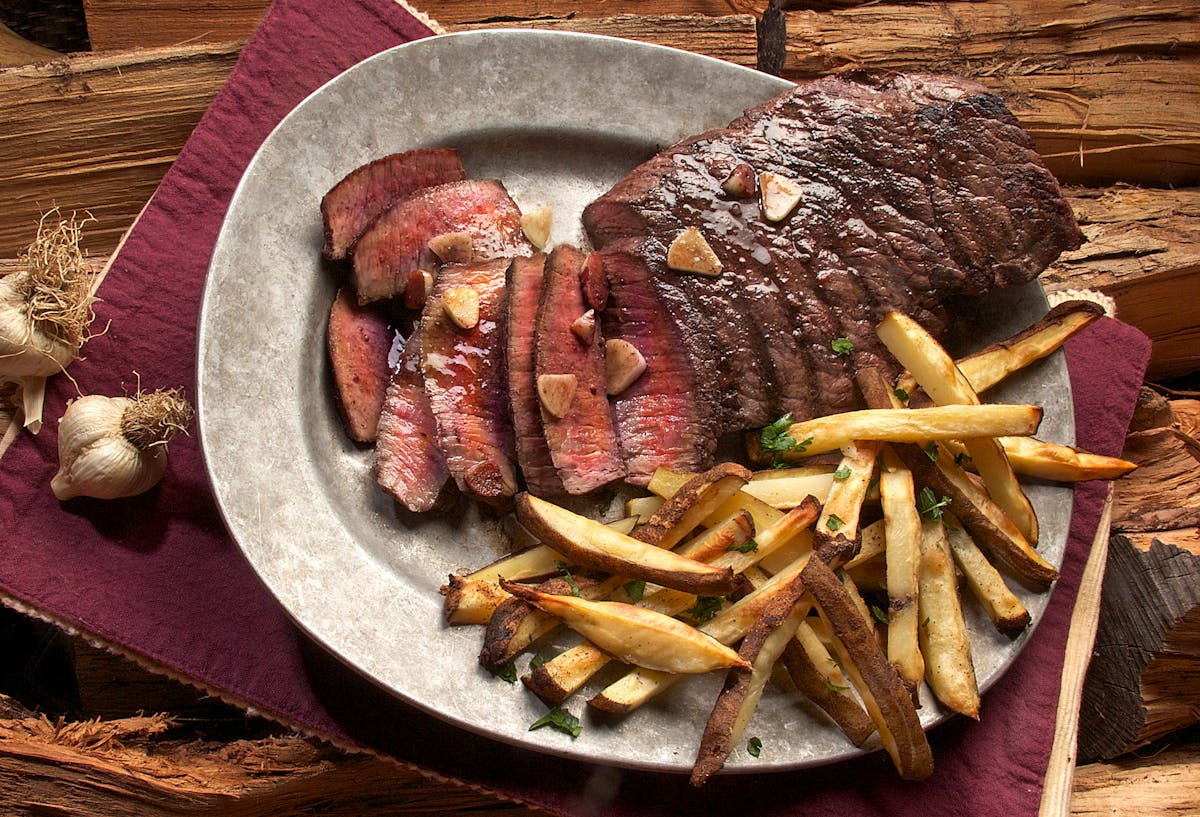
Why This Matters to the Guest
A guest doesn’t care about the temperature of the broiler. A guest cares about the first cut. When a steak arrives with a dark crust, a warm center, and juice that runs pink, the guest knows the kitchen paid attention. When a steak arrives gray, dry, or cold in the center, the guest knows the kitchen didn’t. Temperature is the difference between a chop house that feels like a craft and a chop house that feels like a cafeteria.
This is why the best chop houses train their cooks on temperature before they train them on recipes. A cook can learn a sauce. A cook can learn a side. But a cook who can’t hold a medium-rare across a busy Saturday night is a liability. The fire doesn’t forgive. The guest doesn’t either.
FAQ
What is the ideal internal temperature for a medium-rare steak at a chop house?
A medium-rare steak should be pulled from the heat at 118°F to 122°F and rest to a final temperature of 128°F to 132°F. The exact pull temp depends on the thickness of the cut and the intensity of the fire.
Why does a thick steak keep cooking after it leaves the grill?
Thick steaks hold a large amount of thermal energy. After the steak leaves the heat, that energy keeps moving toward the center, raising the internal temperature. This is called carryover cooking. A two-inch ribeye can climb 8 to 10 degrees during a proper rest.
Does the temperature of the meat before cooking matter?
Yes. A steak pulled straight from a cold walk-in will sear unevenly and often overcook on the outside before the center reaches the target. Letting a steak sit at room temperature for 20 to 30 minutes before cooking helps the surface brown faster and the center cook more evenly.
What is the best way to check a steak’s temperature without cutting into it?
A cake tester or thin metal skewer inserted into the center for five seconds works well. Touch the tester to your wrist: cool means rare, warm means medium-rare, hot means medium-well. The palm test is another option, but it takes practice to read accurately.
The Next Step for This Column
Temperature is the spine of this column. The next article will look at the economics of dry aging: how much weight a primal loses, how much flavor it gains, and whether the math works for a small chop house. That piece will build on the temperature framework here, because dry aging is, at its core, a temperature and humidity problem. If you have a question about fire management, carryover, or butchery temperatures, send it in. The best questions will get answered in a future column.